


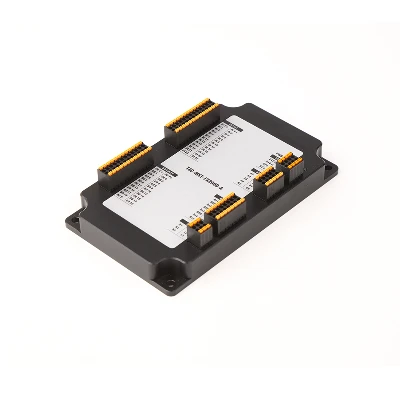

The AGV chassis is an important part of the automatic guided vehicle (AGV). The quality of its structural design directly affects the stability, speed and load capacity of the AGV. The main principles and structural types of the AGV chassis include the following:
Single steering wheel drive structure: This structure consists of 1 steering wheel and 2 directional wheels, and is suitable for tractors and forklifts with a load of more than 1 ton. The single steering wheel drive structure is simple and can be directly adapted to various ground surfaces, but the disadvantage is that the single-wheel drive is prone to offset and requires skill control when turning.
Dual steering wheel drive structure: This is the most common structure on the market. It consists of two driving wheels and one or more non-driving wheels and is suitable for medium-loaded AGVs. The dual steering wheel drive structure can better maintain the stability of the AGV when driving in a straight line, and no special skills are required when turning, so it has been widely used in the market.
Two-wheel differential drive structure: It is suitable for AGVs with a load of 500 kg to 1.5 tons, and can rotate in place but cannot translate. This structure has two forms: 3-wheel structure and 6-wheel structure. The 3-wheel structure is suitable for service robots, but it takes up a lot of space when rotating in place; the 6-wheel structure requires special floating treatment to ensure that the drive wheels are always under force and on the ground.