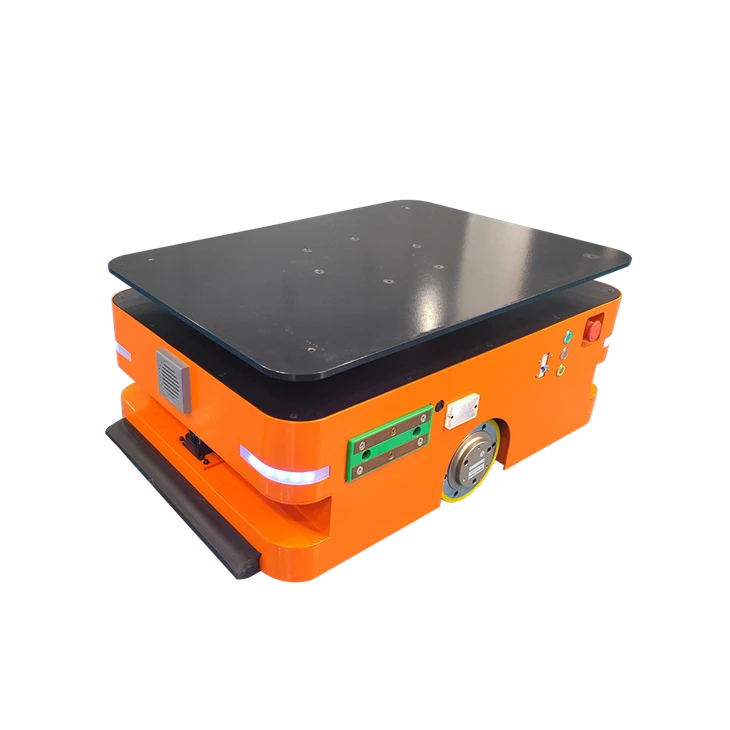
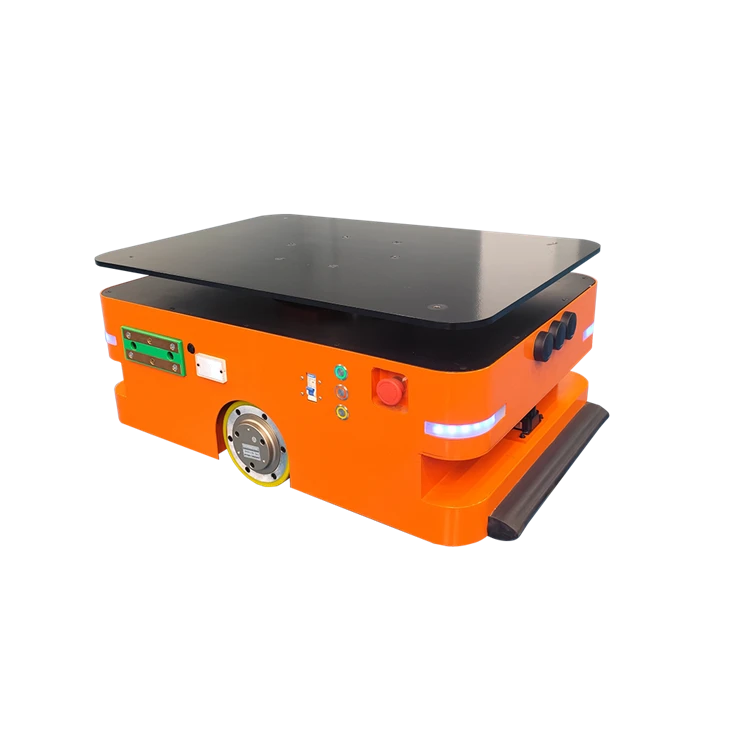
Storage AGV
Storage AGV

Storage AGV

In the field of modern warehousing and logistics, the application of automation technology is becoming more and more extensive, of which Storage AGV is an important part of the development of warehouse automation and logistics.AGV, full name Automated Guided Vehicle, i.e., Automated Guided Vehicle is a kind of transport vehicle which is equipped with automatic guiding device such as electromagnetism or optics and is capable of travelling according to pre-set paths and has safety protection as well as various load shifting functions.
Send Inquiry
Chat Now

Logistic Storage AGV Robot
Model:MDAGV-DSB02

product-1172-359

banner

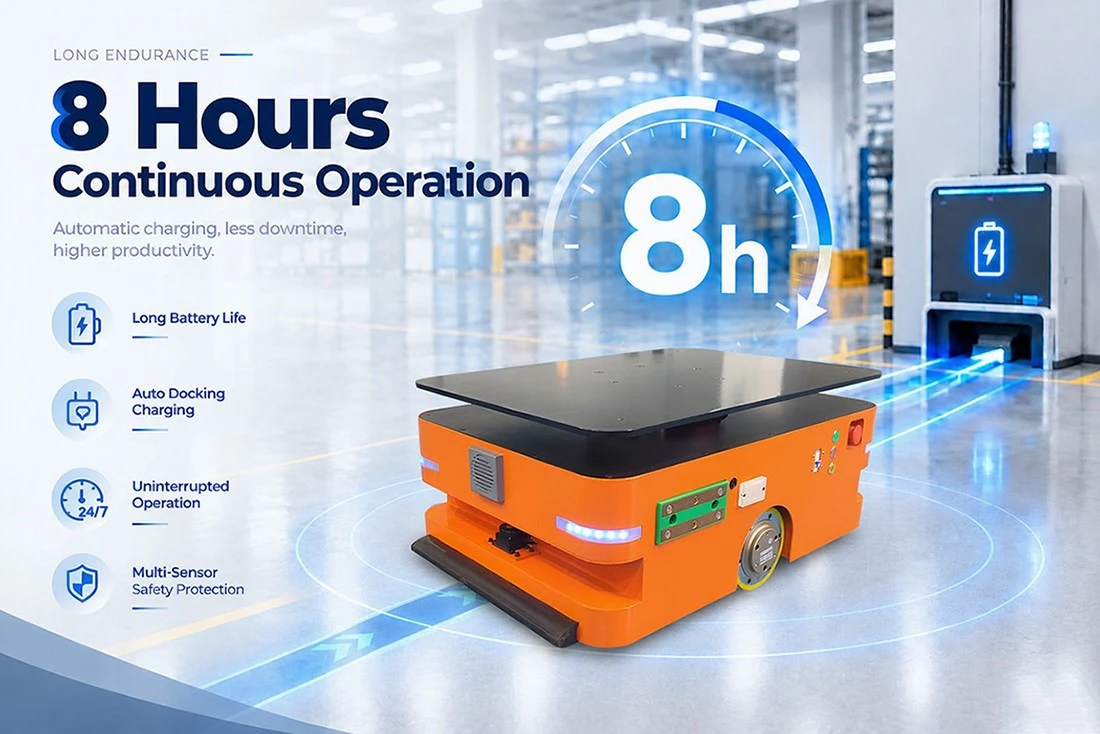
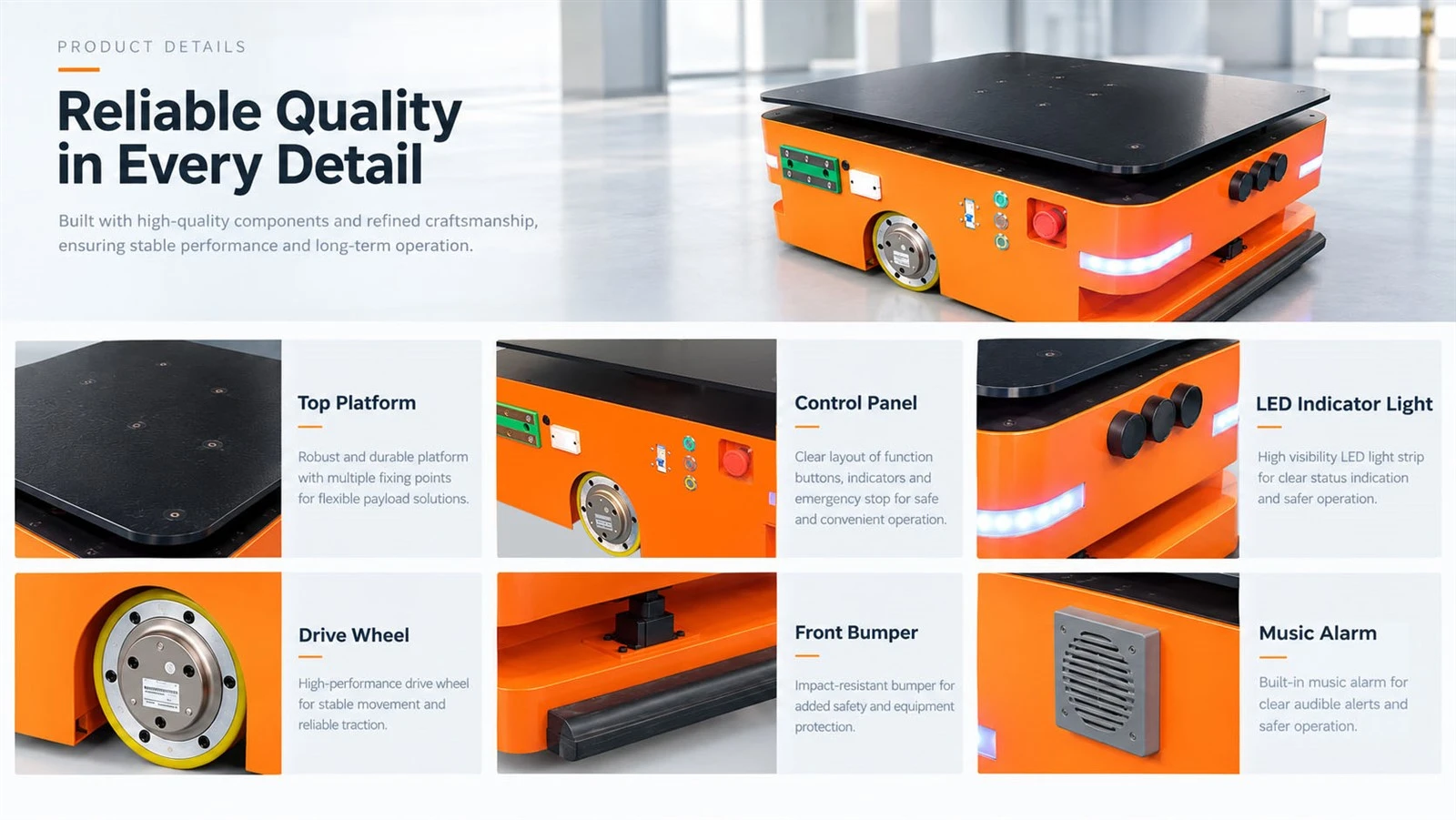
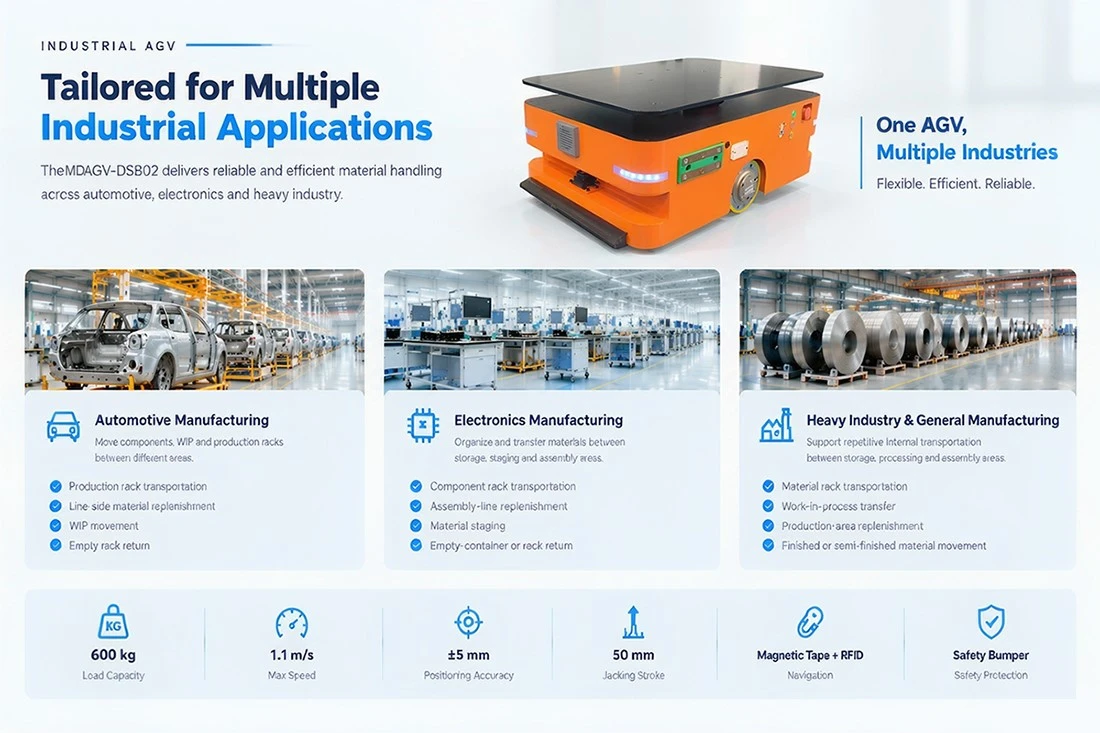
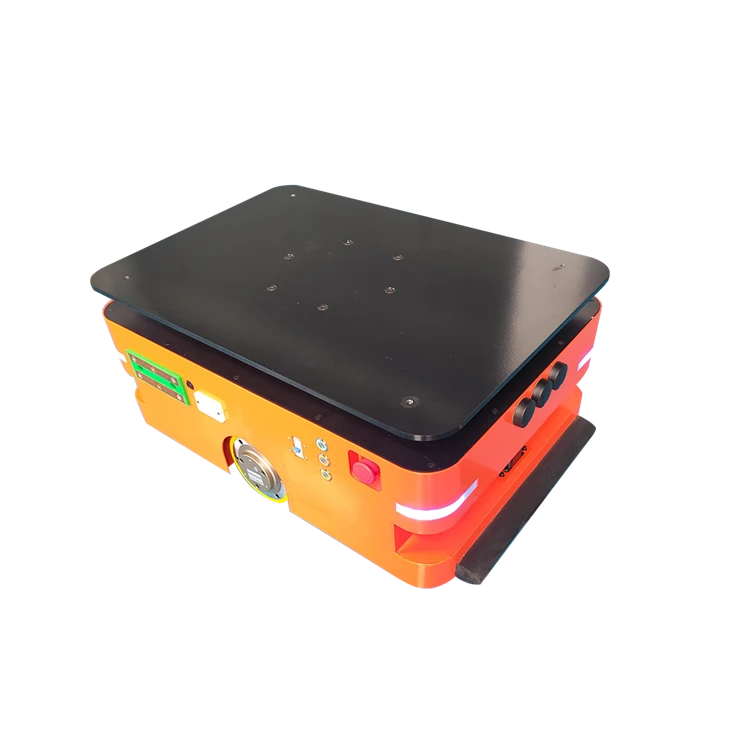
The Logistic Storage AGV Robot aims to optimize the space utilization and operational processes of modern warehouses. This type of automatic guided vehicle is good at completing heavy load handling with high precision. The standard configuration has a load capacity of 600kg and a magnetic navigation positioning accuracy of ± 5mm, which can replace repetitive manual handling and greatly reduce human errors. The whole vehicle adopts a compact body (898 × 560 × 321mm) and a dual sensor layout at the front and rear, supporting bidirectional driving and efficiently passing through conventional workshop and warehouse passages. By reducing passage occupation, the effective storage area of the warehouse is increased. Equipped with mature magnetic stripe navigation and RFID station positioning system, Logistic Storage AGV Robots can stably travel back and forth between shelves and material trucks, achieving material location confirmation at the warehouse level. Relying on 48V 30AH lithium batteries and three energy replenishment modes: battery swapping, manual charging, and automatic charging, AGV can support continuous operation around the clock, significantly improving handling output. In addition, AGV can be integrated with warehouse management systems (WMS), MES, RCS and other upper level systems to achieve real-time synchronization of task issuance and inventory location, providing a data foundation for more intelligent logistics decision-making. Through the automation of material handling, enterprises can improve the safety and operational efficiency of the warehousing process while reducing operating costs.


feature
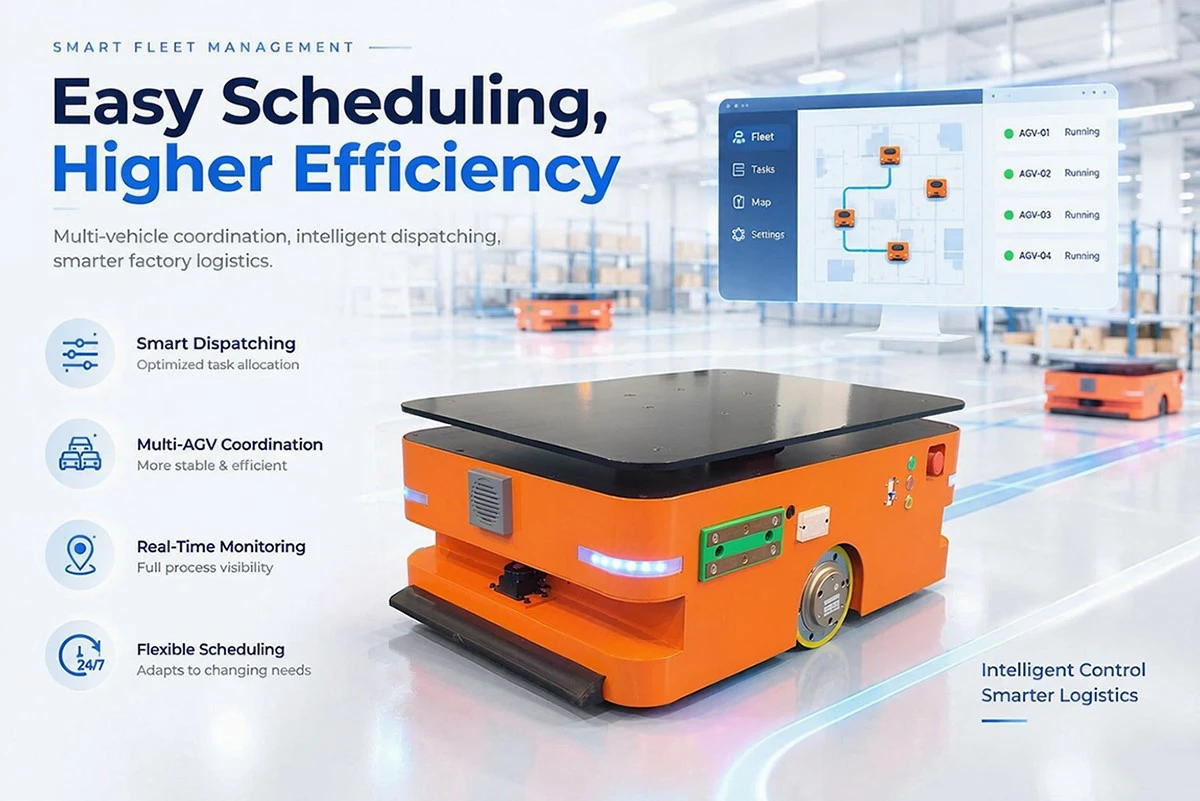
 

1 easy scheduling

1 Intelligent scheduling and multi AGV collaboration enhance factory logistics efficiency

2 eight hour

2 8 hour continuous operation improving the material handling efficiency of AGV factory

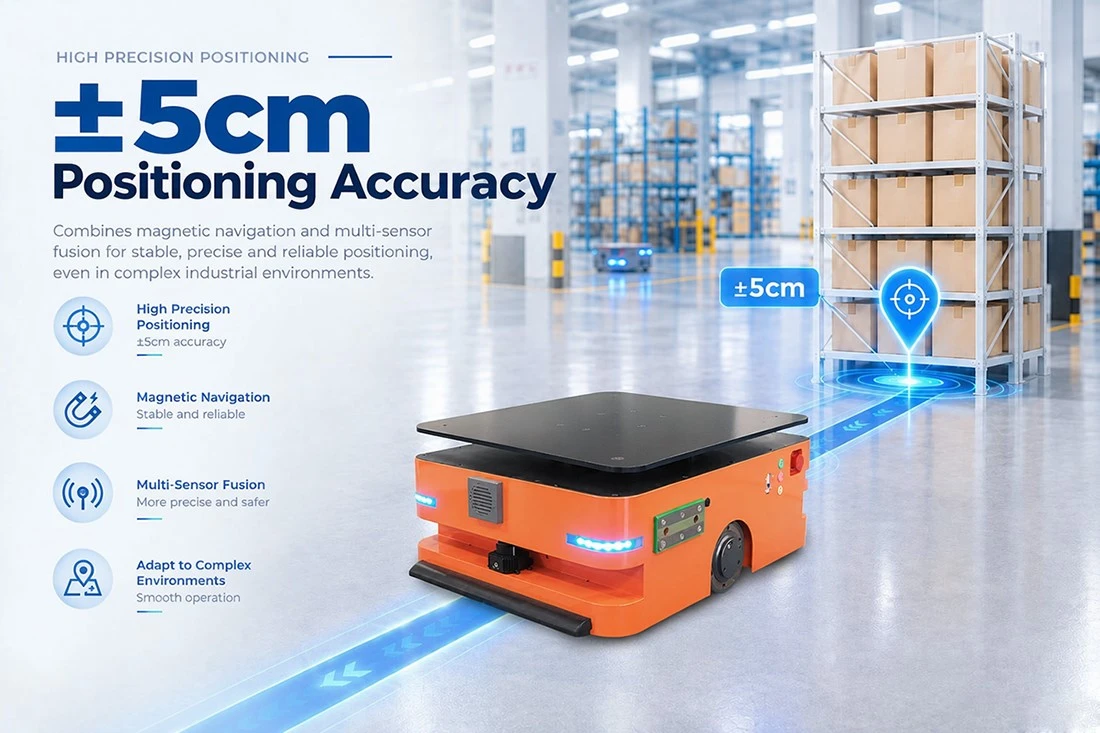
3 5mm high positioning accuracy

± 5cm high-precision positioning AGV: intelligent handling robot with magnetic navigation and multi-sensor fusion
This AGV intelligent handling robot adopts magnetic navigation and multi-sensor fusion technology to achieve high-precision positioning of ± 5cm, and can still operate stably, accurately, and reliably in complex industrial environments. It is widely used in warehousing and logistics automation scenarios.
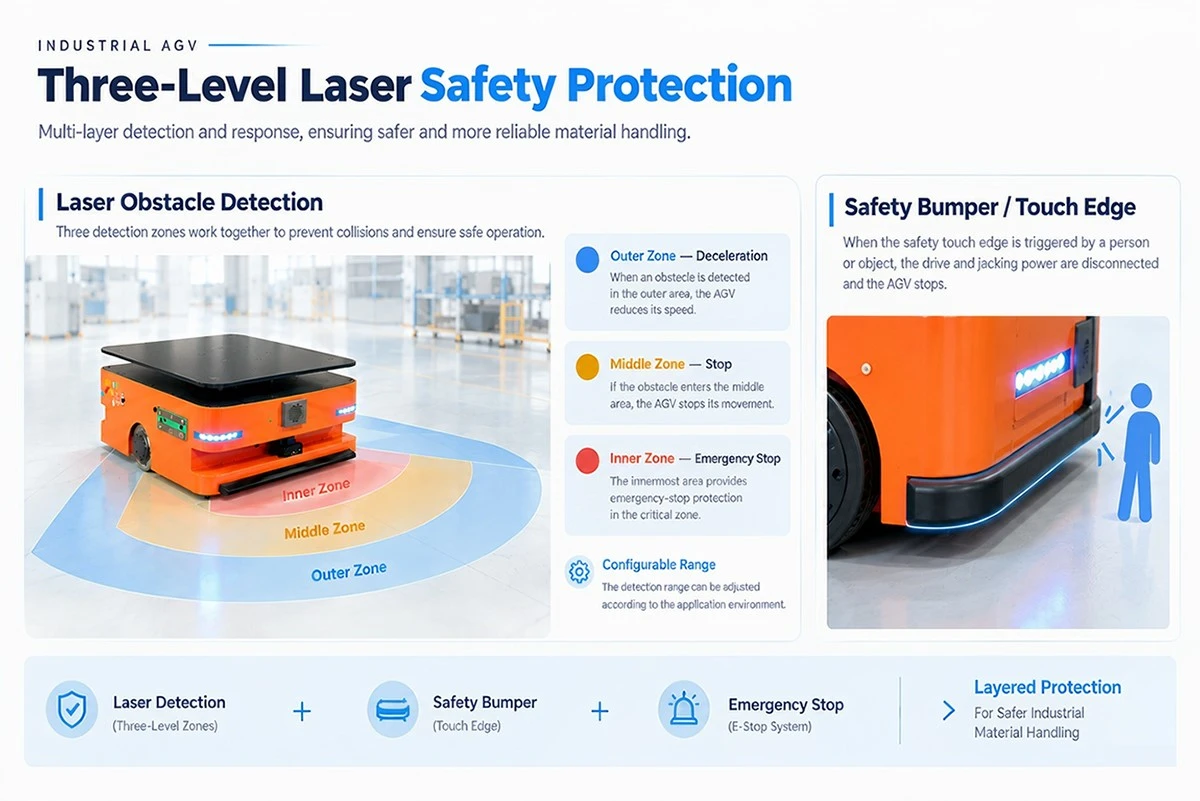

5 safety protection

5 Triple laser safety protection ensures the safe operation of industrial AGVs


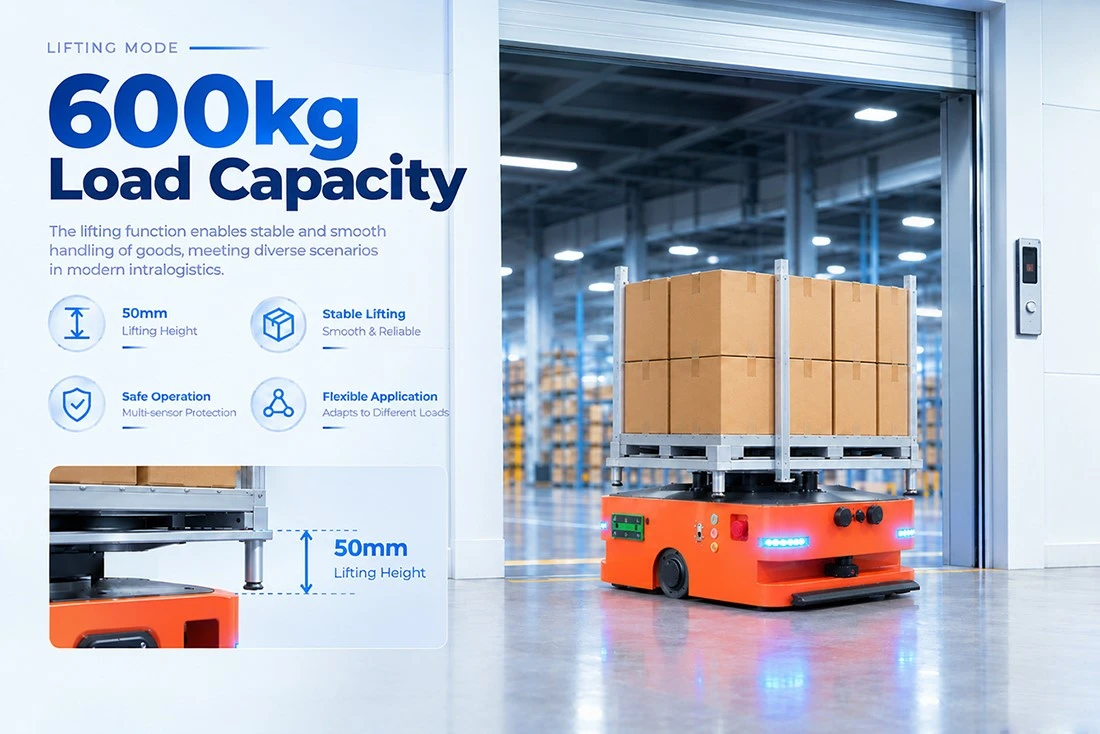
4 600kg lifting capacity

4 600kg load capacity 50mm lifting height suitable for material handling in multiple scenarios
structure 1

product detailsapplication


dimension


MDAGV-DSB02 600kg


Specification


Item

Parameters

Model

MDAGV-DSB02

Dimensions

L898*W560*H321mm

Navigation method

Magnetic navigation

Walking direction

Forward, backward, steer

Rated speed

Max 0.8m/s

Load capacity

600KG

Charging method

Manual charging/Auto charging

Jacking distance

50mm

Jacking speed

≤8mm/s

Positioning accuracy

±5mm

Security system

Laser obstacle avoidance, bumper sensor, emergency stop button

AGV weight

≤150kg

Contact Engineers for Details


FAQ


01.What preparations need to be made before using AGV for the first time?

According to the manual process, there are five steps: ① Open the battery box cover, connect the charging and discharging plugs according to the color, plug them in tightly, and press the button on the battery to wake up the battery; ② Check whether the appearance is intact, whether the obstacle avoidance sensor is obstructed, whether the emergency stop switch is in the released state, and whether the wheel set and universal wheel are stuck; ③ Lay the magnetic strip in advance (with the N pole facing upwards by default, if the polarity of the purchased magnetic strip is opposite, the magnetic navigation sensor needs to be recalibrated). The magnetic strip must be flat and attached to the ground, and RFID tags should be arranged according to the scheduling map; ④ Place the AGV on the magnetic strip, ensuring that the centerline of the vehicle's length coincides with the magnetic strip; ⑤ Turn on the power switch and confirm that the light strip is lit up normally and the button indicator light is on. The lifting mechanism will automatically complete initialization - when the lifting device stops at a low position and the wireless module emits a prompt sound, initialization is complete. At this time, the vehicle can be connected through AGVStudio.

02.What are the functions of the manual buttons on the car body?

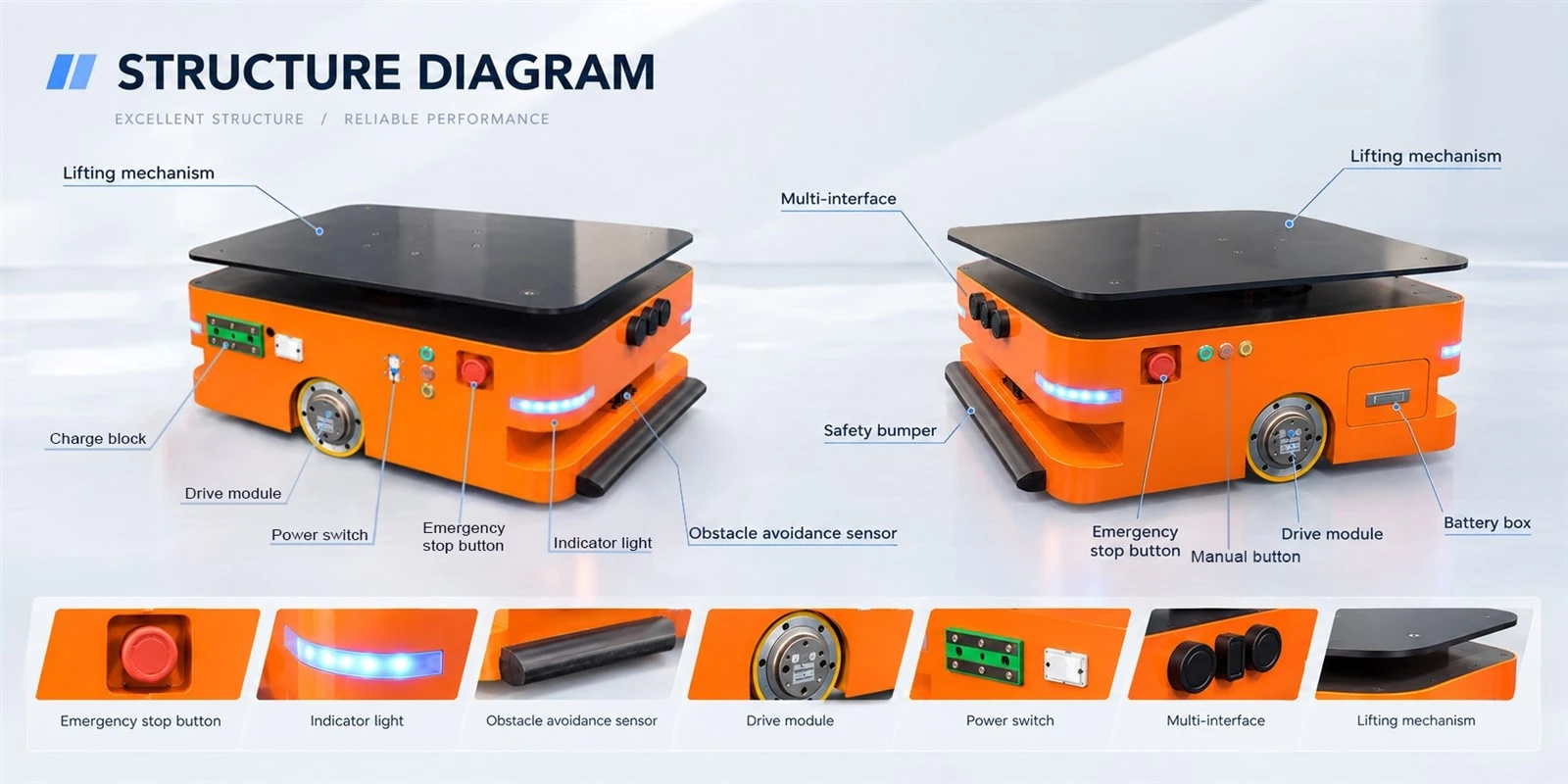
There are operation buttons on both sides of the AGV chassis for easy operation in different positions. There are five function keys in total: emergency stop switch - press to immediately stop the machine in case of an emergency during operation, and when restoring, rotate to reset and power on again for initialization; Stop button (red) - Press when temporary parking is required, AGV will slow down and stop; Start button (green) - After the vehicle pauses due to the stop button, press this button to continue running in the direction of motion before stopping; Reset button (yellow) - When a fault alarm occurs, press this button to clear the error after troubleshooting; Power switch+air switch - After connecting the battery plug, first turn on the switch on the battery, and then control the power on/off of the vehicle through the vehicle power switch. In addition, there is an automatic charging interface that works in conjunction with the charging brush block and charger to achieve automatic charging.

03.What environmental factors on site can affect the stable operation of AGV?

Three factors need to be confirmed in advance: ① Lighting and fixture color - the detection effect of obstacle avoidance sensors is related to on-site lighting and personnel clothing color. In the early stage of the project, on-site lighting conditions and clothing color matching need to be provided to the manufacturer to optimize sensor parameters; ② Wireless communication environment - AGV relies on wireless networks for communication with dispatch stations and upper computers. Wireless APs need to be installed at high altitudes and unobstructed in the surrounding area. It is recommended to use dedicated machines and avoid competing with other devices for channels, otherwise it will affect task distribution; ③ Ground cleanliness and static electricity - The ground must be clean and free of debris. If there is dust accumulation in the obstacle avoidance sensor detection window, it will weaken the detection ability, and even mistake the stain as a close range obstacle and give an alarm. Static electricity should be prevented during cleaning to avoid dust adsorption.

04.How to replace the battery? What precautions should be taken?

There are six steps to replace the battery: ① Open the battery box cover; ② Press the battery button to put it into sleep mode and pop up the buckle; ③ Unplug the communication plug; ④ Unplug the charging and discharging plug; ⑤ Pull out the battery; ⑥ Install a new battery and restore it. Three key precautions: Before inserting or unplugging connectors, the battery button must be pressed to put the battery into sleep mode to avoid sparking; After inserting the battery, it must be securely fastened with a clip to prevent the battery from falling off; If the AGV is not charged for a long time, the power switch should be turned off. After the battery is discharged, it should be recharged as soon as possible. Overdischarge can lead to a decrease in efficiency and a shortened lifespan. If offline battery swapping mode is used, the replaced battery needs to be recharged once a month according to storage requirements.

05.Can materials be directly placed on the vehicle body for handling? What are the limitations of the load?

No. The manual clearly stipulates that transport personnel are not allowed to directly place materials on the AGV body - the vehicle uses a lifting mechanism to transport standard carriers such as shelves and material carts, and the materials must be loaded into the carriers and then transported by the AGV under the roof. At the same time, three load restrictions must be observed: no towing of material trucks exceeding the specified weight is allowed; When towing a material truck, a safety distance of at least 20cm must be reserved on one side of the truck; It is strictly prohibited to directly stack materials on the surface of the vehicle during transportation and lifting. These restrictions are not only related to the lifespan of the equipment, but also directly affect on-site safety. It is recommended to include them in the workshop operation specifications.

06.What are the commonly used spare parts? How much do you suggest keeping?

Appendix II of the manual provides a list of spare parts, which can be configured according to the number of AGVs in the project (N): PU wheels (2 pieces for a single project, 4 pieces for 2-5 units, 6 pieces for ≥ 6 units), drive wheel sets (the same quantity as above, calculated by set), safety edge contacts (2 pieces per unit), M12 shielded proximity switches (OMRON, increasing by number of units), obstacle avoidance sensors TZS-U50C-S (increasing by number of units), 63A main fuses (CNN.63, 1 piece for 1 unit, 2 pieces for 2-5 units, 5 pieces for ≥ 6 units), 5A fuses (25mm-5A), magnetic strips (30 × 1.2mm N poles, with more backup according to the project design quantity) 50%), RFID tag (CNS-CRFID-01, with an additional 30% according to the design usage). It is recommended to prepare enough magnetic strips and RFID at once according to the "design quantity+loss margin", as on-site patching involves downtime and recalibration, and the cost of missing materials is much higher than the cost of spare parts.

product-1159-760

product-1159-1007

product-1159-519

product-1159-735

product-1159-741


product-1159-722

Hot Tags: Storage AGV, China Storage AGV manufacturers, suppliers, factory, Logistics AGV, lifting agv for pallet movement in logistics centers, tool transfer lifting agv, lifting agv for material movement in logistics centers, Warehouse AGV, logistics movement lifting agv