



With the automation upgrade of factory logistics, cross-layer cluster operation has become an important scenario for smart factory transformation. This article analyzes the cross-layer scheduling of the AGV scheduling system to understand how the scheduling system directs the AGV to connect with various automated logistics equipment, shuttle between floors and work areas, and give full play to the scheduling capabilities of multiple elevators, multiple floors, one elevator, and multiple vehicles to achieve multi-industry, full-scene, and full-coverage handling needs.About cross-layer scheduling
The scheduling system is a visual software system that connects multiple unmanned industrial vehicles for communication and task allocation. In the face of multi-layer, multi-scene, and multi-task transportation needs, various information protocols can be used to connect with cross-layer and cross-workshop equipment (such as elevators, rolling gates) and other facilities to give full play to the ability of cross-scene scheduling, complete resource coordination management and unified scheduling, switch between various work scenes at will, and achieve cross-scene, full-process, and trouble-free passage, and realize intelligent loading and unloading and operation in the workshop.
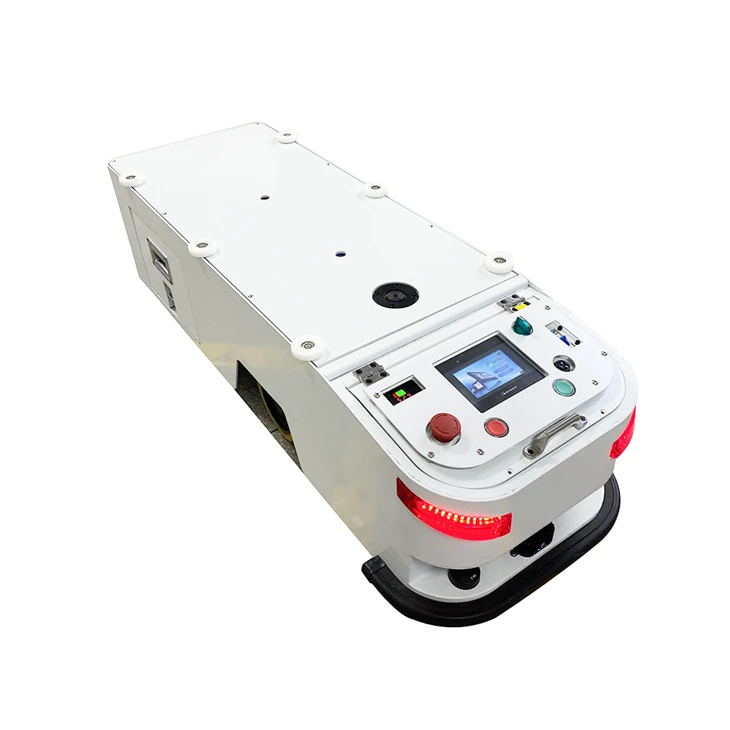
Cross-layer transportation bottleneck problem
The dispatching system can dispatch a dispatching system AGV to dock with multiple cross-layer devices. For example, when docking with an elevator, the dispatching system and the elevator controller need to interact with each other according to the communication protocol, including signals of each floor, leveling signals, and switch signals, which poses a great challenge to the dispatching system. The AGV elevator docking technology is not perfect, and it is necessary to manually match the AGV to enter and exit the elevator together, which not only consumes manpower, but also has safety hazards of human-machine mixing; in the elevator, after the AGV elevator docking technology matures, there will also be problems such as the safety and stability of the AGV and elevator docking, such as signal loss, or signal transmission and reception omissions, resulting in signal loss, and the AGV cannot work normally when docking with the elevator.
After years of technical precipitation, the dispatching system of AGV has successfully solved the industry pain points such as signal disconnection, loss, and misoperation when docking with the elevator.
The improvement of automated transportation efficiency also puts forward higher requirements on the efficiency of elevator use, such as unnecessary waiting when docking with the elevator, and multiple elevator AGVs at the same time, leaving the elevator, resulting in multiple AGVs queuing at the elevator entrance. The AGV dispatching system dispatches and controls the AGV, and combined with independent communication technology, it can realize the reasonable and orderly entry and exit of multiple communication technology AGVs in the elevator, avoiding the crowding of the elevator entrance and realizing the stable and orderly material handling.
Nowadays, the application of AGV trolleys is becoming more and more extensive. With the advancement of economic technology, traditional logistics handling will be eliminated by the times, and new logistics handling robots will emerge. AGV makes full use of logistics handling robots, which will greatly improve the development level of the logistics industry and promote the development of China's economy.
Looking to the future, compared with traditional handling robots, system logistics handling robots equipped with AGV have higher automation capabilities, which can effectively reduce the manpower and time consumption of the logistics industry and reduce the pressure on the development of the logistics industry. With the development of the times, intelligent logistics handling robots will eventually be promoted to all logistics industries to help the development of related industries.