


In the realm of modern logistics, the integration of Automated Guided Vehicles (AGVs) has revolutionized the way goods are transported within warehouses and industrial facilities. However, when these AGVs operate in hazardous environments, such as those with flammable gases, dust, or chemicals, they must adhere to strict explosion - proof requirements to ensure safety and operational efficiency. As a Logistics AGV supplier, I am well - versed in these requirements and will delve into the key aspects that Logistics AGVs need to meet in such challenging settings.
Understanding Hazardous Environments
Hazardous environments are classified based on the type of hazardous substances present and the likelihood of their occurrence. For example, areas with potentially explosive atmospheres are divided into zones. Zone 0, 1, and 2 are for gas - explosive atmospheres, where Zone 0 has a continuous presence of explosive gas mixtures, Zone 1 has a likely presence during normal operation, and Zone 2 has a rarely expected presence. Similarly, for dust - explosive atmospheres, there are Zones 20, 21, and 22.
Logistics AGVs operating in these zones need to be designed and built to prevent the ignition of these hazardous substances. Ignition sources can include electrical sparks, hot surfaces, mechanical sparks, and electrostatic discharges. Therefore, explosion - proof AGVs must be engineered to eliminate or control these potential ignition sources.
Electrical System Requirements
The electrical system of an AGV is a critical area where explosion - proof measures are essential. All electrical components, such as motors, controllers, sensors, and batteries, need to be carefully selected and installed to meet explosion - proof standards.
Motors
Explosion - proof motors are designed to prevent the release of sparks or excessive heat that could ignite the surrounding hazardous atmosphere. They are typically enclosed in a robust housing that can withstand internal explosions without allowing the flame to propagate outside. For example, flameproof enclosures are commonly used, where the motor is housed in a strong metal casing that can contain an internal explosion and prevent it from spreading to the external environment.
Controllers and Sensors
Controllers and sensors are the brains and eyes of an AGV. They need to be protected from the hazardous environment. Intrinsically safe circuits are often employed for these components. Intrinsic safety involves limiting the electrical energy in the circuit to a level that is insufficient to cause ignition. This is achieved through the use of specialized resistors, capacitors, and other components that restrict the current and voltage.
Batteries
Batteries are another potential source of ignition. In hazardous environments, explosion - proof batteries are required. These batteries are designed to prevent the release of flammable gases and to withstand overcharging, short - circuits, and other electrical faults without causing an explosion. For example, some explosion - proof batteries use sealed designs and advanced battery management systems to ensure safe operation.
Mechanical System Requirements
The mechanical components of an AGV also need to meet explosion - proof requirements. This includes the drive system, wheels, and any moving parts.
Drive System
The drive system, which includes gears, belts, and chains, can generate mechanical sparks due to friction or wear. To prevent this, explosion - proof AGVs often use non - sparking materials for these components. For example, bronze or brass alloys can be used instead of steel in some applications, as they are less likely to produce sparks when in contact with other surfaces.
Wheels
Wheels are in constant contact with the floor and can generate static electricity or mechanical sparks. Anti - static wheels are commonly used to dissipate static charges safely. These wheels are made of materials with a specific electrical conductivity that allows the static charge to be gradually released to the ground.
Enclosure and Sealing Requirements
The enclosure of an AGV serves as a physical barrier between the internal components and the hazardous environment. It needs to be properly sealed to prevent the ingress of hazardous substances.

IP Rating
Ingress Protection (IP) ratings are used to indicate the degree of protection provided by the enclosure against the ingress of solid particles and liquids. In hazardous environments, AGVs typically require a high IP rating, such as IP65 or higher. An IP65 rating means that the enclosure is dust - tight and protected against low - pressure water jets from any direction.
Sealing Materials
Sealing materials, such as gaskets and O - rings, are used to ensure a tight seal around the enclosure. These materials need to be resistant to the chemicals and solvents present in the hazardous environment. For example, silicone or fluorocarbon rubber gaskets are often used due to their excellent chemical resistance and sealing properties.
Testing and Certification
Before an explosion - proof AGV can be deployed in a hazardous environment, it must undergo rigorous testing and obtain the necessary certifications. Testing is typically carried out by independent testing laboratories that are accredited to perform explosion - proof testing.
Certification Standards
There are several international and national standards for explosion - proof equipment, such as the ATEX directive in Europe and the UL standards in the United States. AGVs need to comply with these standards to ensure their safety and reliability in hazardous environments. The certification process involves a series of tests, including electrical safety tests, mechanical safety tests, and explosion - proof performance tests.
Our Company's Solutions
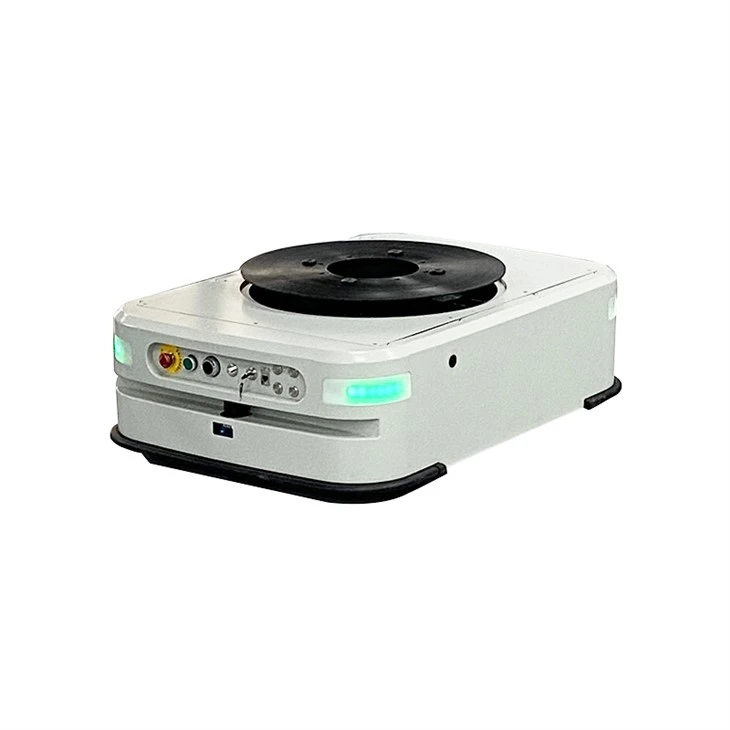
As a Logistics AGV supplier, we offer a range of explosion - proof AGVs that are designed to meet the highest safety standards. Our Top Up Automatic Guided Transport Vehicle is specifically engineered for hazardous environments. It features explosion - proof motors, intrinsically safe electrical circuits, and a robust enclosure with high - quality sealing.
Our Cargo Autonomous Carrier is another product that is suitable for use in hazardous areas. It has a well - protected electrical system and non - sparking mechanical components. The carrier is also equipped with advanced sensors and controllers that are designed to operate safely in explosive atmospheres.
In addition, our Lift AGV is capable of lifting and transporting heavy loads in hazardous environments. It meets all the necessary explosion - proof requirements, including proper battery protection and anti - static features.
Conclusion
In conclusion, Logistics AGVs operating in hazardous environments must meet strict explosion - proof requirements to ensure the safety of personnel and the integrity of the facility. From the electrical system to the mechanical components and the enclosure, every aspect of the AGV needs to be carefully designed and tested to prevent ignition of the hazardous substances.
As a Logistics AGV supplier, we are committed to providing high - quality explosion - proof AGVs that meet the diverse needs of our customers. If you are looking for reliable and safe AGV solutions for your hazardous environment, we invite you to contact us for procurement and negotiation. We have a team of experts who can provide you with detailed information and customized solutions based on your specific requirements.
References
- IEC 60079 series of standards for explosive atmospheres.
- ATEX Directive 2014/34/EU for equipment and protective systems intended for use in potentially explosive atmospheres.
- UL standards for explosion - proof equipment in the United States.