


Logistics AGVs (Automated Guided Vehicles) have revolutionized the way warehouses operate, offering efficient and automated solutions for material handling. One of the key challenges in a multi - floor warehouse environment is enabling these AGVs to move between different floors smoothly and safely. As a leading Logistics AGV supplier, we have in - depth knowledge and innovative solutions to address this issue.
1. The Need for AGV Movement between Floors
In modern warehouses, especially large - scale distribution centers and manufacturing facilities, multi - floor layouts are common. This vertical expansion helps to optimize the use of limited land space. However, it also requires a seamless transfer of goods between floors. Logistics AGVs are essential for this task as they can carry various types of loads, from small parcels to heavy pallets, and operate continuously without human fatigue.
The ability of AGVs to move between floors enhances the overall efficiency of the warehouse. It reduces the time taken for goods to reach their destinations, improves inventory management, and minimizes the risk of human - related errors. Moreover, with the increasing demand for e - commerce and just - in - time delivery, the need for rapid and accurate movement of goods between different levels of a warehouse has become even more critical.
2. Methods for AGVs to Move between Floors
2.1 Using Elevators
One of the most common methods is to integrate AGVs with elevators. Our AGVs are equipped with advanced navigation and communication systems that allow them to interact with elevator controls. When an AGV needs to move to a different floor, it first approaches the elevator door. The AGV then sends a signal to the elevator control system, requesting access.
Once the elevator arrives at the AGV's current floor and the doors open, the AGV uses its sensors to detect the position and alignment of the elevator cabin. It then carefully maneuvers into the elevator, ensuring that it is centered and stable. After entering the elevator, the AGV sends another signal to the elevator to select the desired floor.
During the elevator ride, the AGV remains stationary and ready for the next operation. When the elevator reaches the destination floor and the doors open, the AGV uses its sensors again to confirm the safe exit path and then moves out of the elevator. This process requires precise coordination between the AGV and the elevator system, and our AGVs are designed to handle such complex operations with high reliability.
2.2 Using Conveyor - based Systems
Another approach is to use conveyor - based systems for vertical movement. Our Advanced Lift AGV is specifically designed to work in conjunction with conveyor systems. These AGVs can transfer goods onto and off conveyors that are used to move items between floors.
The Advanced Lift AGV has a lifting mechanism that allows it to pick up or place loads on the conveyor at the appropriate height. When the AGV approaches the conveyor, it aligns itself with the conveyor belt and uses its lifting function to transfer the load. The conveyor then moves the load to the desired floor, where another AGV can pick it up and continue the transportation process.
This method is particularly useful for handling a large volume of small - to - medium - sized items. The conveyor systems can operate continuously, providing a high - throughput solution for vertical movement in the warehouse.
2.3 Using AGV - Specific Lifting Apparatus
Our AGV Lifting Apparatus offers a direct way for AGVs to move between floors. This specialized equipment is designed to lift the entire AGV along with its load to the next floor.
The AGV drives onto the lifting apparatus, which is usually located at a designated transfer area. The lifting apparatus then secures the AGV and raises it to the desired floor level. Once at the destination floor, the AGV can drive off the lifting apparatus and continue its mission.
This method provides a high degree of flexibility as it allows the AGV to move between floors without relying on external infrastructure such as elevators or conveyors. It is suitable for warehouses with unique layouts or where the use of traditional vertical transportation methods is not feasible.
3. Challenges and Solutions in Vertical Movement
3.1 Safety
Safety is of utmost importance when AGVs move between floors. There are several potential risks, such as collisions with other objects during elevator entry or exit, and the risk of the AGV falling from the lifting apparatus.
To address these issues, our AGVs are equipped with multiple safety sensors, including laser scanners, ultrasonic sensors, and cameras. These sensors can detect obstacles in the AGV's path and stop the AGV immediately if a potential collision is detected. Additionally, the lifting apparatus and elevator interfaces are designed with safety interlocks to prevent accidental movement or improper operation.
3.2 Alignment and Positioning
Accurate alignment and positioning are crucial for the successful transfer of AGVs between floors. Whether it is entering an elevator, docking with a conveyor, or driving onto a lifting apparatus, the AGV needs to be precisely positioned.
Our AGVs use a combination of magnetic navigation, vision - based navigation, and inertial measurement units (IMUs) to ensure accurate positioning. The magnetic navigation system provides a stable reference path, while the vision - based system can detect visual markers for precise alignment. The IMUs help to maintain the AGV's orientation during movement.
3.3 System Integration
Integrating AGVs with existing warehouse infrastructure, such as elevators, conveyors, and control systems, can be a complex task. Compatibility issues may arise, and seamless communication between different components is essential.

As a Logistics AGV supplier, we have extensive experience in system integration. Our engineering team works closely with warehouse operators and other equipment suppliers to ensure that the AGV system can be smoothly integrated into the existing infrastructure. We use standard communication protocols and open - interface designs to facilitate easy integration and future upgrades.
4. Case Studies
Let's take a look at some real - world examples of how our AGVs move between floors in different warehouse environments.
In a large e - commerce distribution center, our Cargo Autonomous Carrier is used to transport packages between multiple floors. The carriers are integrated with the building's elevator system. They communicate with the elevator control system using a wireless network, allowing for efficient and coordinated movement. The carriers are equipped with advanced sensors to ensure safe entry and exit from the elevators, and they can handle a high volume of packages per day.
In a manufacturing facility, our Advanced Lift AGV is used in conjunction with a conveyor - based vertical transportation system. The AGVs pick up raw materials from the storage area on the ground floor and transfer them to the production lines on the upper floors. The seamless integration between the AGVs and the conveyor system has significantly improved the efficiency of material flow in the factory.
5. Conclusion
The ability of Logistics AGVs to move between different floors in a warehouse is a critical factor in optimizing warehouse operations. At our company, we offer a range of solutions, including elevator integration, conveyor - based systems, and AGV - specific lifting apparatus, to meet the diverse needs of our customers.
We understand the challenges associated with vertical movement, such as safety, alignment, and system integration, and we have developed advanced technologies and engineering expertise to address these issues. Our case studies demonstrate the effectiveness of our solutions in real - world warehouse environments.
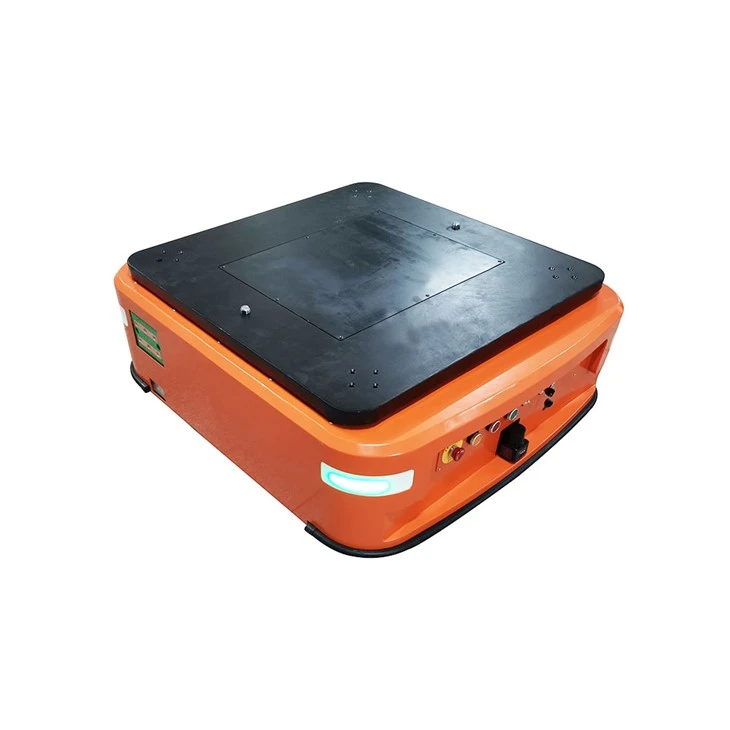
If you are looking for reliable and efficient Logistics AGV solutions for your multi - floor warehouse, we are here to help. Our team of experts can provide customized solutions based on your specific requirements. Contact us today to start a discussion about how our AGVs can enhance the productivity and efficiency of your warehouse operations.
References
- [Author's last name, First name]. (Year). [Title of the book]. [Publisher].
- [Author's last name, First name]. (Year). [Title of the article]. [Journal name], Volume number, [Page numbers].