


As a provider of crawler robots, I am often asked about the size range of these remarkable machines. Crawler robots, also known as tracked robots, are designed to navigate challenging terrains and perform a variety of tasks, from industrial inspections to search and rescue operations. In this blog post, I will delve into the different size categories of crawler robots, their applications, and the factors that influence their size.
Micro Crawler Robots
Micro crawler robots are the smallest in the size spectrum, typically measuring less than 10 centimeters in length. These tiny robots are often used in applications where access to confined spaces is required, such as inside pipes, electronic devices, or small machinery. Their small size allows them to navigate through narrow channels and perform intricate tasks with precision.
One of the key advantages of micro crawler robots is their portability and ease of deployment. They can be easily carried and operated by a single person, making them ideal for on-site inspections and maintenance. Additionally, their low power consumption and minimal footprint make them suitable for long-term monitoring and surveillance applications.
Despite their small size, micro crawler robots are equipped with advanced sensors and actuators that enable them to perform a wide range of functions. For example, some micro crawlers are equipped with cameras and lights, allowing them to capture high-resolution images and videos in dark or hard-to-reach areas. Others are equipped with sensors for detecting gases, chemicals, or radiation, making them useful for environmental monitoring and safety applications.
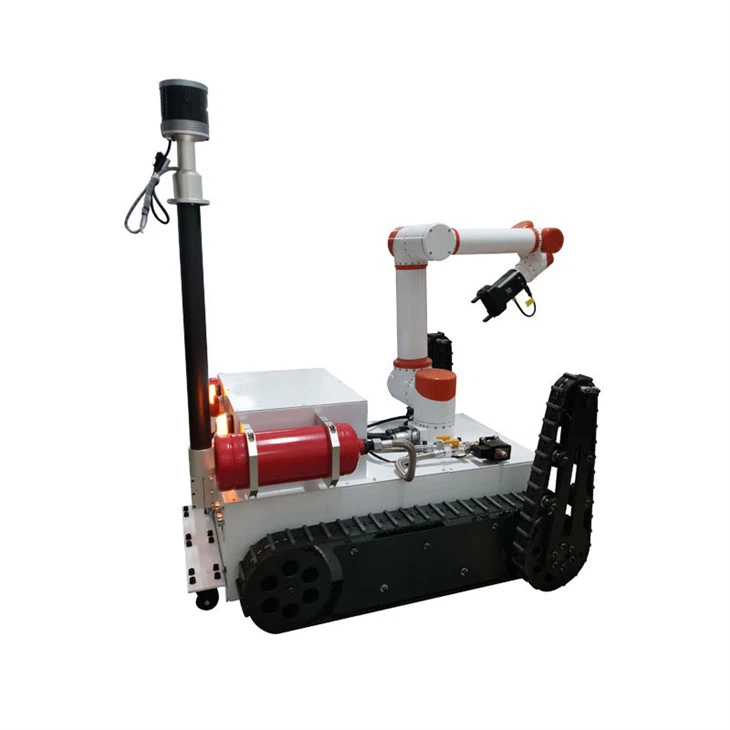

Small Crawler Robots
Small crawler robots typically range in size from 10 to 50 centimeters in length. These robots are larger than micro crawlers and are capable of carrying more payload and performing more complex tasks. They are often used in industrial applications, such as inspection and maintenance of pipelines, tanks, and machinery.
One of the main advantages of small crawler robots is their versatility. They can be equipped with a variety of tools and sensors, depending on the specific application. For example, some small crawlers are equipped with robotic arms for manipulating objects, while others are equipped with ultrasonic sensors for detecting defects in materials. Additionally, their small size and maneuverability allow them to access areas that are difficult or dangerous for humans to reach.
Small crawler robots are also commonly used in research and development applications. They can be used to test new technologies and algorithms in a controlled environment before being deployed in real-world scenarios. For example, researchers may use small crawlers to test the performance of new sensors or navigation algorithms in a simulated environment.
Medium Crawler Robots
Medium crawler robots typically range in size from 50 centimeters to 2 meters in length. These robots are larger than small crawlers and are capable of carrying heavier payloads and performing more demanding tasks. They are often used in industrial applications, such as construction, mining, and agriculture.
One of the main advantages of medium crawler robots is their power and durability. They are designed to operate in harsh environments and can withstand extreme temperatures, dust, and vibrations. Additionally, their large size and powerful motors allow them to carry heavy equipment and perform tasks that require a high level of force.
Medium crawler robots are also commonly used in search and rescue applications. They can be used to search for survivors in disaster areas, such as earthquakes, floods, and fires. Their ability to navigate through rough terrain and climb over obstacles makes them ideal for these types of applications.
Large Crawler Robots
Large crawler robots typically measure more than 2 meters in length. These robots are the largest in the size spectrum and are capable of carrying extremely heavy payloads and performing the most demanding tasks. They are often used in industrial applications, such as mining, construction, and transportation.
One of the main advantages of large crawler robots is their capacity and efficiency. They are designed to handle large volumes of material and can perform tasks that would be impossible or impractical for smaller robots or humans. For example, large crawlers can be used to excavate large amounts of soil or rock in mining operations, or to transport heavy equipment and materials in construction sites.
Large crawler robots are also commonly used in military applications. They can be used to transport troops and equipment, perform reconnaissance missions, and provide support in combat situations. Their ability to operate in harsh environments and withstand enemy fire makes them valuable assets in modern warfare.
Factors Influencing the Size of Crawler Robots
The size of a crawler robot is determined by several factors, including the intended application, the payload capacity, the power requirements, and the operating environment. Here are some of the key factors that influence the size of crawler robots:
- Intended Application: The intended application of the crawler robot is one of the most important factors that determine its size. For example, if the robot is designed for inspection and maintenance of small pipes, it will likely be a micro or small crawler. On the other hand, if the robot is designed for heavy-duty mining or construction applications, it will likely be a large crawler.
- Payload Capacity: The payload capacity of the crawler robot is another important factor that determines its size. If the robot needs to carry a heavy payload, such as a large sensor or a robotic arm, it will need to be larger and more powerful. Conversely, if the robot only needs to carry a small payload, such as a camera or a microphone, it can be smaller and more lightweight.
- Power Requirements: The power requirements of the crawler robot also play a role in determining its size. If the robot needs to operate for long periods of time or perform high-power tasks, it will need a larger battery or a more powerful power source. This may require a larger robot to accommodate the power source and the associated components.
- Operating Environment: The operating environment of the crawler robot is another important factor that determines its size. If the robot needs to operate in a harsh environment, such as a desert, a jungle, or a mine, it will need to be designed to withstand extreme temperatures, dust, and vibrations. This may require a larger and more robust robot.
Conclusion
In conclusion, the size range of crawler robots varies widely, from micro crawlers that measure less than 10 centimeters in length to large crawlers that measure more than 2 meters in length. Each size category has its own advantages and applications, and the choice of robot size depends on the specific requirements of the task at hand.
As a provider of crawler robots, we offer a wide range of products in different sizes and configurations to meet the needs of our customers. Whether you need a micro crawler for inspection of small pipes or a large crawler for heavy-duty mining applications, we have the expertise and the technology to provide you with the right solution.
If you are interested in learning more about our crawler robots or would like to discuss your specific requirements, please feel free to contact us. We would be happy to provide you with more information and help you find the best solution for your needs.
References
- Siciliano, B., & Khatib, O. (Eds.). (2016). Springer handbook of robotics. Springer.
- Choset, H., Lynch, K. M., Hutchinson, S., Kantor, G., Burgard, W., Kavraki, L. E., & Thrun, S. (Eds.). (2005). Principles of robot motion: theory, algorithms, and implementations. MIT press.
- Craig, J. J. (2005). Introduction to robotics: mechanics and control. Pearson Prentice Hall.
Related Products
Contact us today to discuss your crawler robot requirements and explore how our products can meet your specific needs. We look forward to working with you!