


In the dynamic landscape of retail distribution centers, the quest for efficiency, accuracy, and cost - effectiveness is unending. Amidst the various technological advancements, Automated Guided Vehicles (AGVs), especially lifting AGVs, have emerged as a potential game - changer. As a lifting AGV supplier, I am often asked whether these innovative machines can be effectively used in a retail distribution center. In this blog, I will explore this question in depth, considering the capabilities of lifting AGVs, the unique requirements of retail distribution centers, and the benefits and challenges associated with their implementation.
Understanding Lifting AGVs
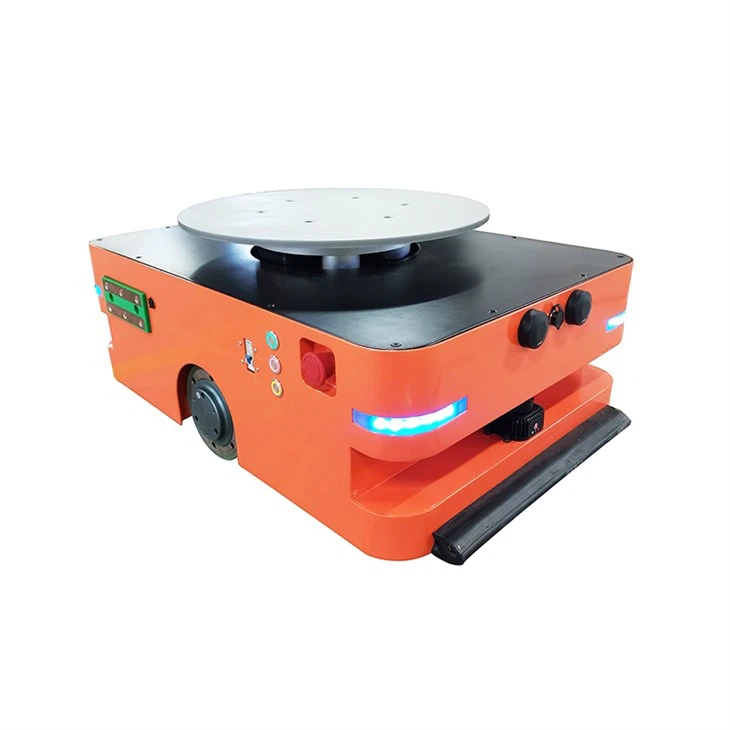
Lifting AGVs are a type of automated vehicle equipped with a lifting mechanism. They are designed to move and lift loads within a defined area, typically a warehouse or a distribution center. These vehicles operate autonomously, following pre - programmed paths or using advanced navigation systems such as lasers, vision, or magnetic tapes.
Our company offers a range of lifting AGVs, including the FlexiPath Laser AMR System. This system uses laser - based navigation, which provides high precision and flexibility. It can adapt to changes in the environment, making it suitable for dynamic retail distribution centers. Another option is our Logistics AGV, which is specifically designed for logistics operations, offering efficient load handling and transportation. And the Warehouse AGV is optimized for warehouse environments, with features like high - speed movement and accurate positioning.
The Requirements of Retail Distribution Centers
Retail distribution centers have several unique requirements that need to be met for smooth and efficient operations.
High - Volume Handling
Retailers deal with a large volume of products on a daily basis. Distribution centers need to be able to handle incoming shipments, store the products, and then pick and pack them for outbound orders quickly. Lifting AGVs can be programmed to work continuously, moving large quantities of goods from one location to another without breaks, which helps in meeting the high - volume demands.
Order Picking Accuracy
In the retail industry, order accuracy is crucial. Customers expect to receive the exact products they ordered. Lifting AGVs can be integrated with inventory management systems. They can pick the right products from the right locations with high precision, reducing the chances of picking errors.
Space Utilization
Retail distribution centers often have limited space. Lifting AGVs are designed to operate in narrow aisles, which allows for better space utilization. They can move in tight spaces, reaching areas that might be difficult for human - operated forklifts to access, thus maximizing the storage capacity of the distribution center.
Flexibility
The retail market is highly dynamic, with changing product lines, seasonal demands, and promotional activities. Distribution centers need to be able to adapt quickly. Lifting AGVs can be reprogrammed easily to accommodate changes in the layout, product flow, or order patterns.
Benefits of Using Lifting AGVs in Retail Distribution Centers
Increased Efficiency
Lifting AGVs can operate 24/7 without fatigue. They can move products at a consistent speed, reducing the time taken for material handling. For example, in a large - scale retail distribution center, AGVs can transport pallets from the receiving area to the storage racks and then to the order - picking stations much faster than manual methods. This leads to a significant increase in the overall throughput of the distribution center.
Improved Safety
Safety is a major concern in any distribution center. Lifting AGVs are equipped with various safety features such as collision sensors, emergency stop buttons, and speed control. They follow pre - defined paths and operate in a predictable manner, reducing the risk of accidents caused by human error, such as forklift collisions or improper load handling.

Cost Savings
Although the initial investment in lifting AGVs can be significant, in the long run, they can lead to cost savings. They reduce the need for a large workforce for material handling tasks, which cuts down on labor costs. Additionally, they can help in reducing product damage due to more precise handling, resulting in lower replacement costs.
Data Collection and Analytics
Lifting AGVs can be integrated with data collection systems. They can record information such as the movement of products, the time taken for each task, and the utilization of storage space. This data can be analyzed to identify bottlenecks in the distribution process, optimize workflows, and make informed decisions about resource allocation.
Challenges of Implementing Lifting AGVs in Retail Distribution Centers
Initial Investment
As mentioned earlier, the upfront cost of purchasing and installing lifting AGVs can be high. This includes the cost of the vehicles themselves, the installation of navigation systems, and the integration with existing IT systems. Smaller retail distribution centers may find it difficult to justify this investment.
Technical Complexity
Implementing lifting AGVs requires technical expertise. The installation, programming, and maintenance of these vehicles need skilled technicians. Retailers may need to invest in training their staff or hire external experts to ensure the proper functioning of the AGV system.
System Integration
Integrating lifting AGVs with existing warehouse management systems (WMS) and other software can be challenging. There may be compatibility issues between different systems, which need to be resolved to ensure seamless operation.
Overcoming the Challenges
To address the challenge of the initial investment, retailers can consider a phased implementation approach. They can start with a small number of AGVs in a specific area of the distribution center, such as the receiving or order - picking area, and gradually expand the system as they see the benefits.
For the technical complexity, our company offers comprehensive training programs for our customers. Our technicians can also provide on - site support during the installation and initial operation of the AGV system.
Regarding system integration, we have a team of experts who specialize in integrating our lifting AGVs with various WMS and other software. We work closely with our customers to ensure that the AGV system fits seamlessly into their existing infrastructure.
Conclusion
In conclusion, lifting AGVs have great potential for use in retail distribution centers. They can meet the unique requirements of these centers, offering increased efficiency, improved safety, cost savings, and better data management. Although there are challenges associated with their implementation, these can be overcome with proper planning, training, and support.
If you are a retailer looking to enhance the efficiency of your distribution center, I encourage you to consider our lifting AGV solutions. We have a proven track record of providing high - quality, reliable AGV systems that can be customized to meet your specific needs. Contact us to start a discussion about how our lifting AGVs can transform your retail distribution operations.
References
- White, A. (2020). "Automated Guided Vehicles in Warehouse Operations: A Review". Journal of Logistics Management, 15(2), 34 - 47.
- Brown, B. (2021). "The Future of Retail Distribution: Technology and Trends". Retail Industry Review, 22(3), 56 - 68.
- Green, C. (2019). "Implementing AGV Systems in Distribution Centers: Challenges and Solutions". Logistics and Supply Chain Journal, 12(4), 78 - 90.