

What is the maximum distance an Omni Drive Robot can travel without recharging?
As a supplier of Omni Drive Robots, I often encounter inquiries from customers about the maximum distance our robots can travel without recharging. This is a crucial question, especially for industries that rely on continuous operation of automated guided vehicles (AGVs) to streamline their logistics and manufacturing processes. In this blog post, I will delve into the factors that influence the travel distance of Omni Drive Robots and provide insights into how we optimize our products to achieve the best possible performance.
Understanding Omni Drive Robots
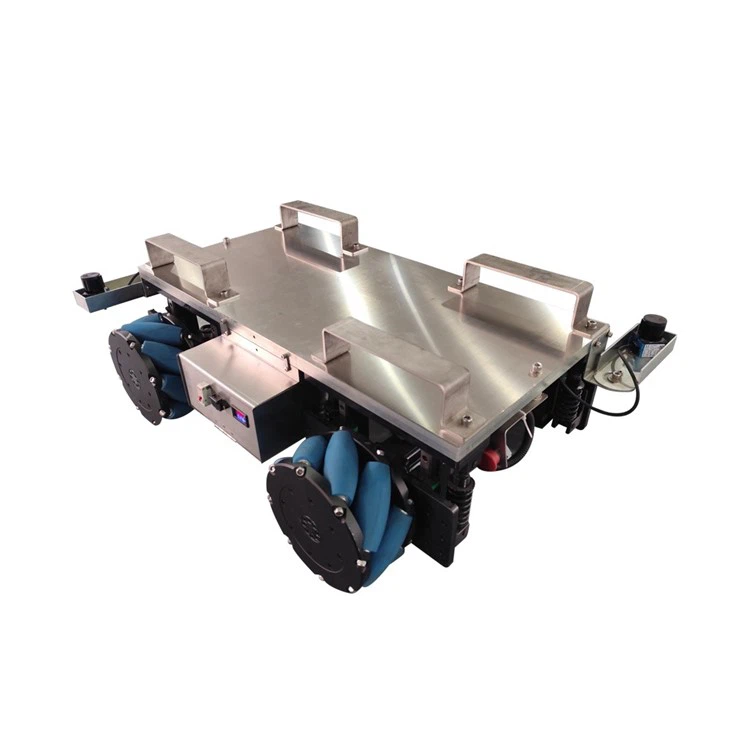
Before we discuss the travel distance, let's briefly understand what Omni Drive Robots are. Omni Drive Robots, also known as Full Direction AGV or All Direction AGV, are a type of automated guided vehicle that can move in any direction without the need for complex steering mechanisms. These robots are equipped with omnidirectional wheels, such as Mecanum wheels or Omni wheels, which allow them to perform lateral, diagonal, and rotational movements with ease. This unique mobility makes them ideal for applications that require precise positioning and flexibility, such as material handling, warehousing, and assembly lines.
Factors Affecting the Travel Distance
The maximum distance an Omni Drive Robot can travel without recharging depends on several factors, including the battery capacity, the power consumption of the robot, the load it carries, and the operating environment. Let's take a closer look at each of these factors:
- Battery Capacity: The battery is the primary source of power for an Omni Drive Robot. The larger the battery capacity, the longer the robot can operate without recharging. At our company, we use high-capacity lithium-ion batteries that offer a high energy density and a long service life. These batteries are designed to provide a consistent power supply to the robot, even under heavy loads.
- Power Consumption: The power consumption of an Omni Drive Robot depends on several factors, including the motor type, the control system, and the operating mode. Our robots are equipped with energy-efficient motors and advanced control systems that optimize the power consumption based on the task at hand. For example, when the robot is moving at a low speed or carrying a light load, the control system will reduce the power output to conserve energy.
- Load Capacity: The load capacity of an Omni Drive Robot refers to the maximum weight it can carry. The heavier the load, the more power the robot needs to move, which will reduce the travel distance. Our robots are designed to handle a wide range of loads, from a few kilograms to several tons. When selecting a robot for a specific application, it is important to consider the load capacity and ensure that it is sufficient for the task.
- Operating Environment: The operating environment also plays a significant role in the travel distance of an Omni Drive Robot. Factors such as the floor surface, the temperature, and the humidity can affect the performance of the robot and its battery. For example, a rough or uneven floor surface will increase the friction between the wheels and the ground, which will require more power to move the robot. Similarly, extreme temperatures or high humidity can reduce the battery life and performance.
Optimizing the Travel Distance
At our company, we take several measures to optimize the travel distance of our Omni Drive Robots. Here are some of the key strategies we use:
- Battery Management System: Our robots are equipped with a sophisticated battery management system (BMS) that monitors the battery status in real-time and optimizes the charging and discharging process. The BMS ensures that the battery is charged to its full capacity and prevents overcharging or over-discharging, which can damage the battery and reduce its lifespan.
- Energy-Efficient Design: We use advanced design techniques and materials to reduce the weight and power consumption of our robots. For example, we use lightweight aluminum frames and high-strength plastics to reduce the overall weight of the robot. We also use energy-efficient motors and control systems that minimize the power consumption without compromising the performance.
- Intelligent Navigation System: Our robots are equipped with an intelligent navigation system that uses sensors and algorithms to optimize the path planning and avoid obstacles. The navigation system ensures that the robot takes the shortest and most efficient route to its destination, which reduces the travel time and energy consumption.
- Remote Monitoring and Maintenance: We offer a remote monitoring and maintenance service that allows us to monitor the performance of our robots in real-time and detect any potential issues before they become serious. Our technicians can remotely diagnose and troubleshoot problems, and even perform software updates and parameter adjustments to optimize the performance of the robot.
Case Study: Travel Distance in a Warehouse Application
To illustrate the impact of the above factors on the travel distance of an Omni Drive Robot, let's consider a case study of a warehouse application. In this scenario, the robot is used to transport pallets of goods from the storage area to the shipping area. The distance between the two areas is approximately 100 meters, and the robot needs to make multiple trips per day.
- Battery Capacity: The robot is equipped with a 48V, 100Ah lithium-ion battery, which provides a total energy capacity of 4.8 kWh.
- Power Consumption: The power consumption of the robot depends on the load it carries and the operating mode. When the robot is carrying a full pallet of goods, the power consumption is approximately 1.5 kW. When the robot is moving empty, the power consumption is approximately 0.5 kW.
- Load Capacity: The robot has a load capacity of 2 tons, which is sufficient to carry a full pallet of goods.
- Operating Environment: The warehouse floor is smooth and flat, and the temperature and humidity are within the normal range.
Based on the above parameters, we can calculate the travel distance of the robot without recharging. Assuming that the robot makes a round trip of 200 meters per trip, and it carries a full pallet of goods on the way to the shipping area and returns empty, the total power consumption per trip is approximately 1.5 kWh (1.5 kW x 1 hour for the loaded trip + 0.5 kW x 1 hour for the empty trip). Therefore, the robot can make approximately 3 trips without recharging, which corresponds to a total travel distance of approximately 600 meters.
Conclusion
In conclusion, the maximum distance an Omni Drive Robot can travel without recharging depends on several factors, including the battery capacity, the power consumption, the load capacity, and the operating environment. By optimizing these factors, we can significantly increase the travel distance of our robots and improve their performance and efficiency. At our company, we are committed to providing our customers with high-quality Omni Drive Robots that offer the best possible travel distance and performance. If you are interested in learning more about our products or have any questions about the travel distance of our robots, please feel free to contact us for a consultation. We look forward to working with you to find the best solution for your application.

References
- "Omnidirectional Mobile Robots: A Review," by A. K. Saha and S. K. Saha, in Robotics and Autonomous Systems, vol. 60, no. 10, pp. 1397-1409, 2012.
- "Battery Management Systems for Electric Vehicles: Issues, Design, and Architectures," by M. E. Khan, A. M. E. Eltamaly, and A. M. Sharaf, in IEEE Transactions on Industrial Electronics, vol. 64, no. 1, pp. 18-28, 2017.
- "Energy-Efficient Path Planning for Mobile Robots in Warehouse Environments," by Y. Zhang, Y. Wang, and X. Li, in IEEE Transactions on Automation Science and Engineering, vol. 16, no. 2, pp. 387-398, 2019.