

As a supplier of Crawler Robots, I've seen firsthand the amazing capabilities these machines bring to various industries. They're tough, can handle rough terrains, and are super useful in many applications. But like anything else, they're not all sunshine and rainbows. There are some disadvantages that potential buyers need to know about before making a purchase.
High Initial Investment
One of the biggest drawbacks of Crawler Robots is the high initial cost. Developing and manufacturing these robots involves using high - tech materials and advanced engineering. For instance, the tracks on Track Driven AGV ROBOT need to be made of durable materials that can withstand heavy loads and rough surfaces. The sensors, control systems, and power sources also add to the overall cost.
When you're looking at buying a Crawler Robot, you're not just paying for the physical machine. You're also paying for the research and development that went into making it reliable and efficient. This high cost can be a major barrier for small and medium - sized businesses. They might not have the budget to invest in these robots, even if they could potentially benefit from them.
Maintenance and Repairs
Crawler Robots require regular maintenance to keep them in top - notch condition. The tracks, for example, are constantly in contact with the ground, which means they're prone to wear and tear. If the tracks aren't properly maintained, they can start to slip, reducing the robot's efficiency and potentially causing it to break down.
Moreover, the internal components of Crawler Robot such as the motors, sensors, and control boards also need regular checks. These parts are often complex and may require specialized technicians to repair or replace them. This not only adds to the cost but also means that there can be significant downtime if the robot breaks down. If a business relies on these robots for its operations, any downtime can lead to lost productivity and revenue.
Limited Speed
Compared to other types of robots, Crawler Robots are generally slower. The design of the tracks limits their maximum speed. While the tracks provide excellent traction and stability, they also create more friction with the ground. This friction slows down the robot, especially when it's moving on flat and smooth surfaces.
In applications where speed is crucial, such as fast - paced manufacturing lines or time - sensitive delivery services, the limited speed of Crawler Robots can be a major disadvantage. For example, if a company needs to quickly move products from one end of a large warehouse to another, a faster - moving robot would be a better choice.
Noise and Vibration
Crawler Robots can be quite noisy and generate a lot of vibration. The tracks moving over the ground, along with the operation of the motors and other internal components, create a significant amount of noise. This can be a problem in environments where noise needs to be kept to a minimum, such as hospitals or research laboratories.
The vibration can also have a negative impact on the robot's performance. Excessive vibration can cause the sensors to malfunction, leading to inaccurate readings. It can also put additional stress on the internal components, increasing the risk of damage and reducing the robot's lifespan.
Environmental Limitations
Although Crawler Robots are known for their ability to handle rough terrains, they still have some environmental limitations. For example, in extremely muddy or sandy conditions, the tracks can get clogged, reducing the robot's mobility. In very cold environments, the rubber or other materials used in the tracks can become brittle, increasing the risk of cracking.
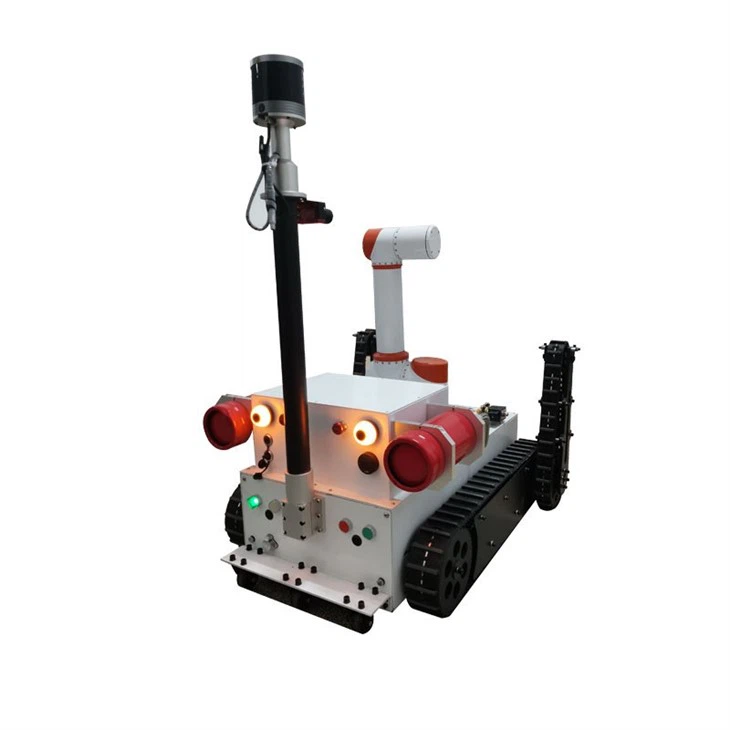

In addition, Crawler Robots may not be suitable for indoor environments with limited space. Their relatively large size and the turning radius required by the tracks can make it difficult for them to navigate through narrow corridors or small rooms. In such cases, a more compact and maneuverable robot would be a better option.
Training Requirements
Operating and programming Crawler Robots requires specialized training. The control systems of these robots are often complex, and operators need to understand how to use them effectively. This training can be time - consuming and expensive for businesses.
Employees need to learn how to program the robot to perform specific tasks, how to troubleshoot common problems, and how to maintain the robot. If a business doesn't have a well - trained workforce, it may struggle to get the most out of its Crawler Robots.
Data Security Risks
In today's digital age, data security is a major concern. Crawler Robots are often equipped with sensors and cameras that collect a large amount of data. This data can include information about the environment, the tasks being performed, and the location of the robot.
If this data falls into the wrong hands, it can pose a serious security risk. For example, in industrial applications, the data collected by the robot could reveal sensitive information about the manufacturing process or the company's operations. Ensuring the security of this data requires additional investment in encryption and other security measures.
Despite these disadvantages, Crawler Robots still have a lot to offer. They're incredibly versatile and can be used in a wide range of applications. If you're considering purchasing a Crawler Robot for your business, it's important to weigh the pros and cons carefully.
If you think a Track Moving Robot could be the right fit for your needs, even with these drawbacks, I'd love to have a chat with you. We can discuss your specific requirements and see how we can customize a solution that works best for you. Don't hesitate to reach out for a detailed discussion about procurement and how we can make these robots work in your favor.
References
- Industry reports on robotics technology
- Technical specifications of Crawler Robots
- Case studies on the use of Crawler Robots in different industries