

In the ever - evolving landscape of logistics, customer service has emerged as a critical differentiator for businesses. With customers demanding faster, more accurate, and reliable delivery services, logistics companies are constantly on the lookout for innovative solutions to meet these expectations. One such solution that has gained significant traction in recent years is the use of logistic robots. As a logistic robot supplier, I have witnessed firsthand how these advanced machines are revolutionizing the logistics industry and enhancing the customer service level.
1. Faster Order Fulfillment
One of the most significant ways logistic robots improve customer service is by enabling faster order fulfillment. In traditional warehouses, human workers are responsible for picking, packing, and shipping orders. This process can be time - consuming, especially in large warehouses with a high volume of orders. Logistic robots, on the other hand, can operate 24/7 without fatigue, significantly reducing the time it takes to process orders.
For example, Warehouse AGV is designed to navigate through warehouses efficiently, transporting goods from storage areas to packing stations. These AGVs can move at high speeds and follow pre - programmed routes, ensuring that products are delivered to the right place at the right time. By automating the material handling process, Warehouse AGVs can help logistics companies fulfill orders much faster, leading to shorter delivery times for customers.
In addition, robots can work in tandem with human workers to optimize the order fulfillment process. For instance, robots can handle the repetitive and physically demanding tasks, such as moving heavy pallets, while human workers focus on more complex tasks, such as quality control and customer service. This division of labor not only improves efficiency but also reduces the risk of human error, resulting in a more accurate and reliable order fulfillment process.
2. Improved Inventory Management
Accurate inventory management is crucial for providing excellent customer service in logistics. Customers expect to receive the products they ordered in a timely manner, and any stockouts or delays can lead to dissatisfaction. Logistic robots play a vital role in improving inventory management by providing real - time visibility into stock levels and locations.
Robots equipped with sensors and cameras can scan barcodes and RFID tags on products, allowing them to track inventory movements accurately. This data can be integrated into a warehouse management system (WMS), providing logistics managers with up - to - date information on stock levels, locations, and movement patterns. With this information, managers can make more informed decisions about inventory replenishment, reducing the risk of stockouts and overstocking.
The MDBOT Jacking Up AGV Robot is an excellent example of a robot that can contribute to improved inventory management. This robot is capable of lifting and transporting heavy loads, making it ideal for moving pallets in and out of storage racks. By automating the pallet movement process, the MDBOT Jacking Up AGV Robot can help logistics companies optimize their storage space and improve inventory turnover.
Moreover, the real - time inventory data collected by robots can be used to provide customers with accurate information about product availability. For example, customers can check the status of their orders online and see exactly when their products will be in stock and ready for delivery. This transparency builds trust with customers and enhances their overall shopping experience.
3. Enhanced Order Accuracy
Order accuracy is another key aspect of customer service in logistics. Customers expect to receive the correct products in the right quantity and condition. Any errors in order processing can lead to returns, exchanges, and customer complaints. Logistic robots can significantly improve order accuracy by reducing the risk of human error.
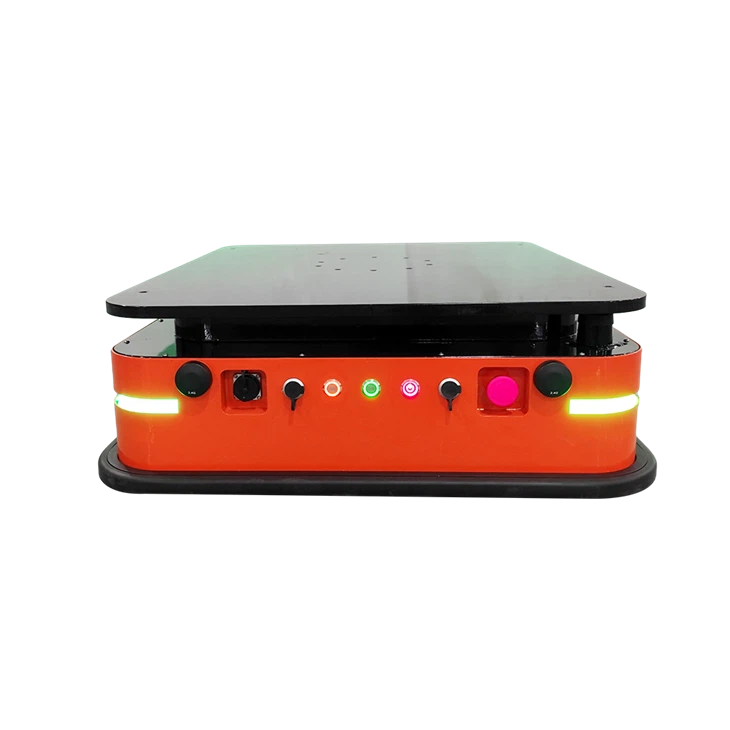

Robots are programmed to follow strict rules and procedures, ensuring that they pick and pack the correct products every time. For example, the SwiftLaser AMR uses advanced laser navigation technology to move around the warehouse with high precision. It can accurately identify and pick the right products from the shelves, minimizing the chances of picking the wrong items.
In addition, robots can be integrated with a WMS to receive real - time order information. This allows them to pick and pack products based on the exact specifications of each order, ensuring that customers receive exactly what they ordered. By improving order accuracy, logistic robots can reduce the number of returns and exchanges, saving time and money for both logistics companies and customers.
4. Flexibility and Scalability
In today's dynamic business environment, logistics companies need to be able to adapt quickly to changing customer demands. Logistic robots offer a high degree of flexibility and scalability, making them an ideal solution for meeting these challenges.
Robots can be easily reprogrammed and reconfigured to perform different tasks as needed. For example, if a logistics company experiences a sudden increase in demand for a particular product, it can quickly adjust the robot's programming to prioritize the picking and packing of that product. This flexibility allows logistics companies to respond quickly to changing market conditions and customer needs, ensuring that they can continue to provide high - quality service.
Furthermore, logistic robots can be easily scaled up or down depending on the volume of orders. As a logistics company grows, it can add more robots to its fleet to handle the increased workload. Conversely, during periods of low demand, the company can reduce the number of robots in operation to save costs. This scalability ensures that logistics companies can optimize their resources and maintain a high level of customer service regardless of the order volume.
5. Safety and Reliability
Safety is a top priority in the logistics industry, both for workers and customers. Logistic robots are designed with safety features to ensure that they can operate safely in a warehouse environment. For example, robots are equipped with sensors and collision avoidance systems that can detect obstacles in their path and stop or change direction to avoid collisions.
In addition, robots are more reliable than human workers in terms of performance. They are less likely to make mistakes due to fatigue, distraction, or other human factors. This reliability ensures that the logistics process runs smoothly and that customers receive their orders on time and in good condition.
By providing a safe and reliable logistics operation, logistic robots can enhance the overall customer experience. Customers can have peace of mind knowing that their orders are being handled by advanced and dependable machines, reducing the risk of damage or loss during transit.
6. Contact for Purchase and Collaboration
If you are a logistics company looking to improve your customer service level, logistic robots are a game - changing solution. As a leading logistic robot supplier, we offer a wide range of high - quality robots, including the Warehouse AGV, MDBOT Jacking Up AGV Robot, and SwiftLaser AMR, to meet your specific needs.
Our team of experts can work with you to design a customized logistics automation solution that fits your business requirements. Whether you need to improve order fulfillment speed, enhance inventory management, or increase order accuracy, we have the expertise and technology to help you achieve your goals.
Contact us today to start a conversation about how our logistic robots can transform your logistics operations and take your customer service to the next level. We look forward to collaborating with you to create a more efficient and customer - centric logistics system.
References
- Britt, T., & Cassivi, D. (2020). The Impact of Automation on Logistics Operations. Journal of Supply Chain Management.
- Lee, S., & Kim, J. (2019). Inventory Management in the Age of Logistics Automation. International Journal of Logistics Research and Applications.
- Smith, R. (2018). Improving Order Fulfillment with Robotic Systems. Logistics and Transportation Review.